
Analysis / decision board● active view
Statewhat is actually happening now
Riskwhat needs priority
Actionwhat should happen next
Situational picture
Priorities
Recommendations
Effective security requires a clear picture of the situation: what is visible, what matters, where the risk lies, and what needs to happen next. No pretense and no burying the reader in technical noise.
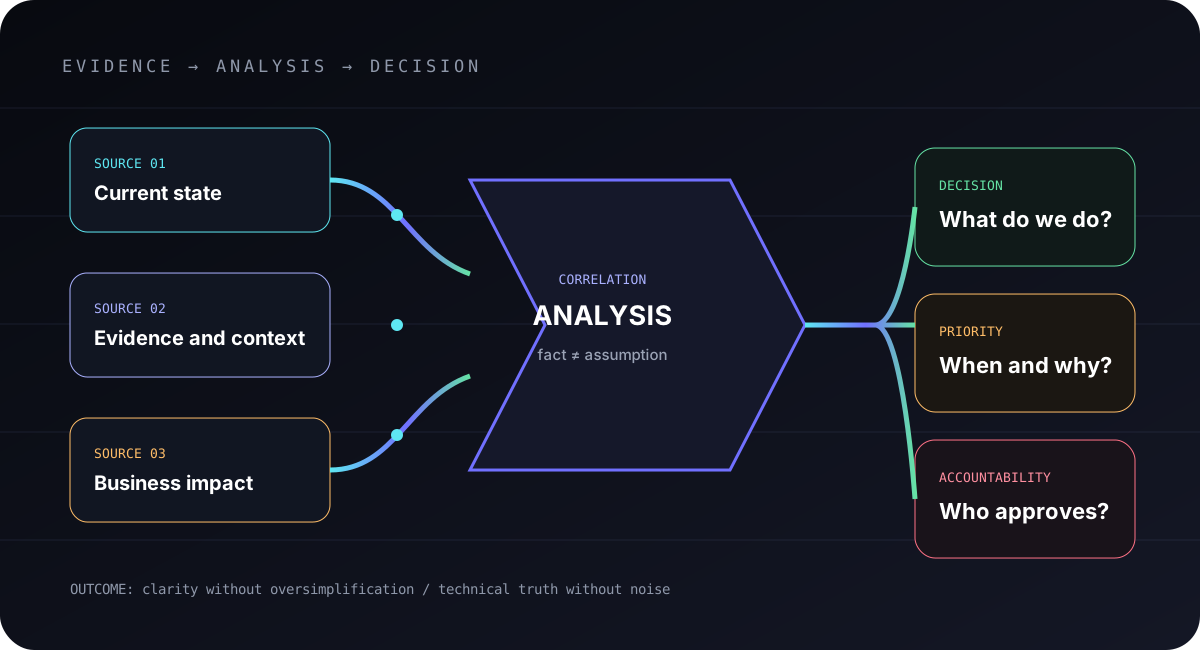
The result must answer the reader's questions without losing technical accuracy. That is why I separate the expert layer from the layer used to make decisions.
What exists, what works, what departs from expectations, and what needs verification.
Data alone means little without the process, people, and real use scenario.
I separate what matters from what merely looks serious on paper.
The report ends with a clear course of action, an accountable owner, and a reason for the next step.
The most important evidence, risks, and course of action presented in a form that supports a decision.
Broader context for those who will own the issue: dependencies, observations, and recommendations.
The report should settle the question “what do we do about it?” rather than create more ownerless questions.
This part of the site shows how we approach the work: reporting and analysis as instruments of control, accountability, and action — without exposing client data, facilities, or operational details.